Friday, June 29, 2007

End of financial year

Today is the last working day of the financial year. Here's five features of the end of financial year (or of the dawn of the new financial year) for me:


1. Bills, bills, bills - no, I don't mean paying them. I mean generating them. Anyone who works in professional services will know about this. Bill as many clients as possible before end of financial year to try to make budget for the year!

2. Consequently, not a lot of other work gets done in last couple of days of the financial year.

3. Pay rise time.

4. Tax cut time (at least that has been the case the last few Federal budgets).

5. Therefore, the challenge: pay rise + tax cut = how can I use the extra cash for good and for God's glory rather than for selfish pursuits?

Tuesday, June 26, 2007

I'll take my hymns with a pinch of grunge thanks

I spoke recently about doing modern arrangements for hymns - same tune, same lyrics, just smooth out the chords to be more guitar friendly and contemporary sounding. Contemporizing it, as Dan would say.

Well, thanks to David's free music links last week , I've discovered the ultimate in contemporized hymns - grunge! And who better to do grunge than a church from Seattle, the capital city of grunge. Seattle, the home of not only Kurt Cobain, but Mark Driscol, the reformissioning pastor of Mars Hill Church. And Mars Hill Church is the home of some outstanding contemporary Christian worship bands.

Go here to listen. Click on "music" in the menu, then "bands" and then across to each of the bands then click on the individual songs to either download or add to your playlist.

Try these ones on for size (five of them of course). All fantastic hymns in their own right, but now with a distinctly Seattle sound (OK, not all of them are particularly grunge, but they are all definitely edgy!). Can you get your church band to play like this?

1. All Creatures of our God and King - there's numerous versions, but try the ones by E-Pop, The Parsons and Red Letter. My fave is the E-Pop version.

2. Amazing Grace - again, a few versions to try, but try the two versions by E-Pop, and particularly good is the one by Team Strike Force.

3. How Great Thou Art - by Northern Conspiracy and The Parsons. How good are the lyrics to this song? We had it at our wedding ten years ago (a month after having sung it at my grandma's funeral, so a particularly moving hymn for my family). "And when I think that God His Son not sparing, sent Him to die I scarce can take it in ..."

4. It is Well With my Soul - by The Parsons. Good stuff.

5. Praise to the Lord - The Parsons again. Love the simple piano chords in this one.

Have a look around - there's much more than the 5 above. There's some good modern songs there too, but the hymn arrangements are gold. I'm feeling inspired ...

So does this mean the drought's over?


Friday, June 22, 2007

Five ways to increase blog hits

I'm not really the master at this, having only just gone over 1,000 hits myself, but I have seen what works and when the hits have increased more quickly, so here's five tips:

1. As Craig S would say, post regularly. The more posts, the more there is to read, the more often people will come back. Simple really. Craig S of course is the master at this, being a man who posts many, many entries every day.

2. Try to post on controversial topics. My hit rate piked (well, it was a pike by my standards, perhaps not for others) when I stirred up the waters of infant baptism earlier this year (10 comments, 3 links, can't remember how many hits). And when people comment on said controversial topic, respond to their comment to keep the discussion alive and people coming back.

3. Similarly, try to post on topics that other people are likely to find interesting and link to on their blogs. A bit of linkage always increases the hit rate. (Or get someone with a more popular blog, like your brother for example, to link to you, or perhaps have your brother, unbeknownst to you, suggest to someone else who has an even more popular blog, to link to you ...).

4. Comment on other people's blogs. They will see your hyperlinked name and then your blog is only a couple of clicks away.

5. Now this is Dave's technique. Try to post on something topical that people are likely to be searching for, and try to mention that particular topic as many times as possible in your post to increase the prominence of your entry in any search engine results. Dave tried this with his recent post on the frog-turned-prince, piece-of-coal-turned-diamond Paul Potts, the winner of Britain's Got Talent . How did it go Dave? Did people come to your site in a Potts driven frenzy?

Anyone got any more tips?

Thursday, June 21, 2007

Now, about that whole "five" thing ...

One reason for finding frequent posting difficult is that I painted myself into a corner by choosing this "five" theme to my blog. It can take some time to think up five points on any given issue, let alone articulate those five points.

This post, and a few of mine over the last week or so, are examples of quick, sharp posts that are easier to do more often. (And via email as well.)

Guthers in fact mentioned in the comments over at The Fountainside the other day that he had noticed I'd started just posting a few lines (while SamR was getting into the whole five thing by doing "penta-posts"!).

I'm going to stick with the five theme, but keep interspersing my penta-posts with shorter, quicker posts to keep things moving ...

One thousand and one

That is the number my stat counter clicked over to today. I know some of you are celebrating 10,000, or 50,000 or even 175,000 hits, but I'm happy to have reached the magic 1,000!

Of course, posting more often might help. In the last few weeks, with a few extra posts the stat counter clicked over a lot faster.

I'll try to keep it up ...

Monday, June 18, 2007

Five cosmic truths from John 1


What a great chapter of the Bible, one of my favourites. It contains such mindblowing cosmic truths such as these:

1. In the beginning was the Word.

2. The Word was with God, and the Word was God.

3. Through him, all things were made; without him nothing was made that has been made.

4. In him was life, and that life was the light of men.

5. The Word became flesh and made his dwelling among us.

To think that he who is eternal, divine, the creator of all, the light of the world, came and dwelt among us, taking on our frail flesh, is truly amazing.

The Church's One Foundation

An update on my last post. The re-worked hymn seemed to go well at church yesterday with some positive feedback. Really quite simple to do. Just need to work out the basic chords to play, throw in a bit of improvisation, avoid playing the melody and let the congregation belt it out.

I'll be trying more of this and letting some good old hymns make a comeback onto our song list.

Friday, June 15, 2007

On hymnody


Some more thoughts on church and music, this time on hymns:

1. I've always loved hymns. How good is it to bellow out an old Charles Welsey song? Some of these hymn writers of old wrote such gold, words so rich and deep and true and soaked in scripture, wonderful words pointing to a Wonderful Saviour. And accompanied by such soaring tunes, how could you not want to sing them?

2. Yet, since I've started choosing music at church this year, I seem to have avoided hymns for some reason. And I think it's because I've realised that culturally, hymns can grate somewhat. They can have a thumping, sometimes staid sound to them, even the brighter ones.

3. Further, traditional hymn arrangements were written for organs. They kind of work when just played on piano, though even then can have a thumping sound that is slightly jarring, but when you're trying to develop a small contemporary band where guitars have greater prominence, the hymns just don't work. There is the tedium of the chord changing for nearly every note, every strum, each syl-la-ble-of-the-song. It's not the natural way a guitar is played, so winds up sounding weird.

4. The answer? Keep the tune, keep the lyrics, but work up a new arrangement. Not a completely new tune as is common (and often works well). No, this is much easier. Just smooth out the chords. One chord per bar, two at most. Maybe have four bars where the bass note is kept constant. Change a couple of the chords from the original arrangement to give it a slightly different sound - make it a similar chord, but different nonetheless - B minor instead of G major, for example.

5. The result. Great lyrics, great tune. No need to teach a new song, but you have breathed new life into an old song. The guitar can play it and it sounds natural. The changed chords give a few little suprises that keep it sounding interesting. The bass can play along without having to play every note. The piano can muck around with the chords, without having to sound like it's thumping. The congregation is hopefully uplifted having sung great words of praise to God without it feeling tiresome to do so. And the visitor who already finds singing in public to be a little weird, at least finds that the music sounds half decent and not trapped in some cultural time warp.

I'm trying it this coming Sunday with a new arrangement I've penned this evening for "The Church's One Foundation". Will keep you posted as to how it goes.

Overheard in a crowded train carriage ...

"This isn't the Orient Express you know. We're all packed in here like sardines," said the plump man with the hat, speaking to no-one in particular and yet to the whole carriage at the same time, as well as to those waiting on the platform to get on.

The train picked up a few more people, then continued on its way towards the city carrying it's morning load of commuters. The man remained silent, perhaps absorbed by his own thoughts.

The train pulled up some minutes later at Central. A voice could be heard. It was him.

"It's a bit like India." Pause. "How long is it since you've been there?", he said rather embarrassingly and inappropriately to a fellow passanger, who I could not see from where I stood on the steps, but who I could only assume was of sub-continental appearance. I don't think there was any answer to the question, but the man continued nonetheless. "Well, maybe you'll get back to see your family some time soon."

Sunday, June 10, 2007

Five things to say about singing in church


I've taken on responsibility for leading the music team at church this year, so have been thinking a bit about music and church. Here's some thoughts, probably all overlapping somewhat.

1. God made us as emotional beings and gave us music as a way to express that emotion. We only need look at the place of music in every culture to see this, but more importantly the pages of scripture testify to the place of song in the life of God's people.

2. The primacy of the ministry of the word should not mean devaluing music. Indeed, a "word-centred" church should recognise that song is a powerful way to express the word of God, but also that music is one way we have of responding to the word of God. In singing, we express our joy and thankfulness to God in response to the saving word of the gospel of Jesus Christ. (See Colossians 3:16).

3. In saying that the ministry of song goes hand-in-hand with the ministry of the word, we need to be careful however to ensure our songs are not simply statements of doctrine set to music. A song should have music that lifts our hearts, and lyrics that are rich with poetry. Don't give me dry songs. If you want to just set a doctrine text book or statement of belief to uninspiring music, what's the point of having the music?

4. Much has been made in evangelical circles recently of the "horizontal" dimension to music i.e. singing to each other. This is all true. However, we need to avoid forgetting the "vertical" dimension of music. There is nothing wrong with singing to God and not just about God.

5. OK, the whole "worship" thing. Yes, some churches misemphasise the purpose of church as being to worship God, in a sense which might suggest we are not worshipping God the other 6 days a week, and some have confused what we do in church with Old Testament cultic worship, and that we somehow enter into God's presence when singing in church i.e. the "praise and worship" time. BUT, we evangelicals have way over-reacted against some of these errors by almost purging the word "worship" from our vocabulary all together, and removing any sense that when we gather together as God's people we are worshipping God, or that singing can involve worship. I think we can and should acknowledge that singing does involve worshipping God, while recognizing that worship is also much more than singing.

Stay tuned (excuse the pun) ... more posts to come on music and church ...

Saturday, June 02, 2007

Five insights into wealth and happiness


Interesting article in the Herald today: We've never had it so good, so why are we still unhappy? It comes at a time when I've been wondering why the Howard government is faring badly in the polls when the economy continues to be strong and people continue to be well off.

Here's five particular insights the article had to offer:

Increasing numbers of Australians are discovering that despite the booming economy and rampant consumerism, work and wealth may not be the true twin paths to bliss.


... research by the Workplace Relations Centre at the University of Sydney shows Australians are fed up with long hours - men working full-time do an average 45 hours a week - and a third of those polled want to return to the eight-hour work day.


these electoral intentions are consistent with worldwide findings that people in affluent countries are no happier today than 50 years ago, even though their wealth has grown exponentially.


There's a sense that the pressure just keeps mounting but there is no pay-off for increasing productivity in the workplace and all the labour-saving devices that we have at home.


... the happiness of residents of wealthy societies is a function more of personal relationships than money.

As I read these comments, I couldn't help thinking it's all been said before. Here's five more quotes, this time from the Old Testament book of Ecclesiastes:

What does man gain from all his labor at which he toils under the
sun?


So I hated life, because the work that is done under the sun was grievous to me. All of it is meaningless, a chasing after the wind.


I denied myself nothing my eyes desired;
I refused my heart no pleasure.
My heart took delight in all my work,
and this was the reward for all my labor.
Yet when I surveyed all that my hands had done
and what I had toiled to achieve,
everything was meaningless, a chasing after the wind;
nothing was gained under the sun.


Whoever loves money never has money enough;
whoever loves wealth is never satisfied with his income.
This too is meaningless.


As goods increase,
so do those who consume them.
And what benefit are they to the owner
except to feast his eyes on them?


God really is very wise. Wiser even than The Sydney Morning Herald.

Five things to do in Melbourne


Never content to simply do business in another city (e.g. see previous London posts), I managed to play the tourist and find a few things to do on a quick 36 hour trip to Melbourne this week. Here's five very Melbourne things to do:

1. Have dinner in a groovy cafe in one of those back lanes off Little Collins Street - a bowl of pasta, a glass of red wine, and a good book (assuming you have no-one to talk to and share dinner with). I love Melbourne's little lane-ways.

2. Rise for an early morning jog along the banks of the Yarra (and realise the sun doesn't rise in Melbourne at this time of year till well after 7am!).

3. Do a lap of the MCG (well, around the outside that is.).

4. Get a bit wet in the drizzly rain.

5. Catch a tram to St Kilda for breakfast. (Actually, I ran out of time for that one - had a meeting to get to. But maybe next time ...).

Five reasons for blogging hiatus ...

I've had a few comments as to why I haven't blogged in a while. Here's five reasons (amongst others ...)


(OK, well, yes this north coast holiday was a few weeks ago now, and it doesn't explain the entire non-blogging period, but it was 2 weeks out of action, plus the week or two beforehand frantic at work getting everything done, plus general busyness on getting back to real life afterwards ...)

P.S. Don't you just love the canefields of the far North Coast? (i.e. second last photo above). There's something about a good canefield that makes you really feel like you're on holidays. Of course, a coffee by the beach helps too ...

Sunday, April 08, 2007

Five hundred reasons I believe in the resurrection of Jesus


For what I received I passed on to you as of first importance: that Christ died for our sins according to the Scriptures, that he was buried, that he was raised on the third day according to the Scriptures, and that he appeared to Peter, and then to the Twelve. After that, he appeared to more than five hundred of the brothers at the same time, most of whom are still living, though some have fallen asleep. Then he appeared to James, then to all the apostles, and last of all he appeared to me also, as to one abnormally born.

And if Christ has not been raised, our preaching is useless and so is your faith. More than that, we are then found to be false witnesses about God, for we have testified about God that he raised Christ from the dead. But he did not raise him if in fact the dead are not raised. For if the dead are not raised, then Christ has not been raised either. And if Christ has not been raised, your faith is futile; you are still in your sins.

Happy Easter!

Friday, March 30, 2007

Five truly excellent experiences in London

1. St Paul's Cathedral - a postcard can never do it justice. Amazing piece of architecture and awe inspiring size. Also went to Sung Eucharist - not usually my thing, but if you're going to do it, you might as well do it somewhere like St Paul's and get the full aesthetic experience! (though shame about the wishy washy sermon)
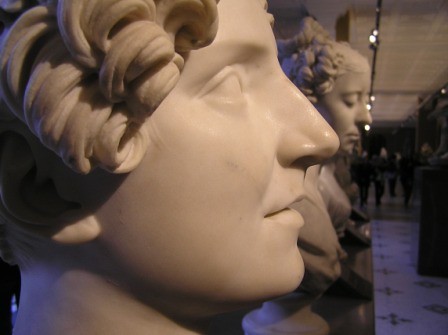
2. Victoria & Albert Museum - I went to see the architecture exhibition, but got lost and immersed in the vast and amazing array of European sculptures.


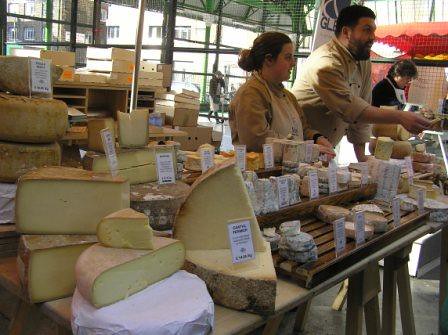
3. Borough Markets - I've already raved in my earlier post about the coffee here, but the whole thing was a great experience, with cheese tasting and a wild boar sausage being other highlights.


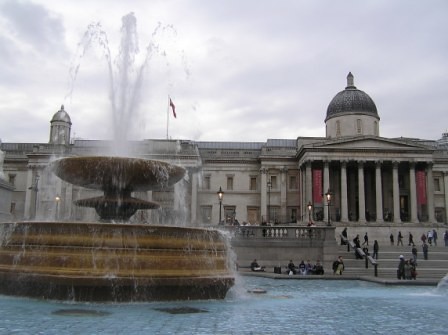
4. Trafalgar Square - I virtually stumbled into Trafalgar Square by accident, my map not clearly marking it out, and suddenly I realised I was standing in the middle of a famous postcard. A great place for gathering of crowds, and a central point for so many other landmarks.


5. The Tube - loved it. I loved the challenge of navigating my way round its tangled, yet somehow quite efficient, web. Trains every 4 minutes - something Sydneysiders can be very jealous of! You can get anywhere on this!

Thursday, March 29, 2007

Sunday, March 25, 2007

Five comments on coffee in London

1. London can't do coffee like Sydney can do coffee. Which I find astounding for a city so close to Italy. We on the other side of the world have allowed the Italians to influence our coffee culture far more, and this has definitely been for the better.

2. London seems more influenced by America when it comes to coffee. People specifically order filtered coffee when coffee orders are taken in restaurants (can you imagine actually voluntarily wanting to drink filtered coffee, as opposed to it being the only choice on offer??).

3. More obvious still is that Starbucks have completely taken over the city. Every second street corner has a Starbucks outlet. Indeed, according to the wikipedia article on Starbucks, London has more outlets than Manhattan! Sorry, but Starbucks do not do good coffee!

4. Order a flat white almost anywhere and be met with a blank stare!

5. If you want a good coffee, go to Monmouth Coffee Company at Borough Markets (Fridays and Saturdays). Mmmmm ... beautiful. I craved good coffee for a whole week before getting there and it was so good I had to go back for a second cup (see photo above). They got the flavour right, they got the crema right. But it's a rare find in a big city ...

Tuesday, March 13, 2007

Five observations of All Soul's Langham Place

1. This is a big church. I reckon there'd be close to 500 people at their evening service.

2. Reflective of London itself, this is a very multicultural church, even more so than churches in Sydney. There were obviously people here originating from all four corners of the globe. Genuine mix of ages too. Nice to see.

3. I wasn't spoken to our welcomed personally by anybody, but I think I'm prepared to forgive that in a church that big. How could anyone possibly know who's a newcomer and who's not?

4. I don't know whether it was to give a little taste of home to any Aussies in the congregation, but Toni Collette was used as a sermon illustration (including a brief mention of Muriel's Wedding), and a Geoff Bullock song was sung (Power of Your Love - can you believe it - I haven't heard that song for years! That may actually be a good thing ...).

5. The gospel of Jesus Christ is the same wherever you are in the world. Isn't that great!

Saturday, March 03, 2007

Five reasons why I think Christians should baptise their children

For most of my life, I've held to "believers only" baptism (i.e. usually adult, or at least older children). But tomorrow, I am having all three of my children (aged 4.5 yrs, 2 yrs and 5 mths) baptised. Why am I doing this?

I am doing this because I have come to quite firmly believe that Christian believers should baptise their children. [Note, I still do not think unbelievers or "nominal Christians" should baptise their children; it is that practice that turned me off infant baptism for so long.]

Why do I now think this? I could go on for ages, and I'm not sure I'm yet able to articulate this as well as I'd like to, but here's five reasons:

1. The starting point is to say that baptism itself is important. On its own, the mere splashing or pouring or immersing in water may not necessarily mean much, but what that water points to are things of profound and amazing wonder - the washing away of sin, our burial and resurrection with Christ, and the pouring of God's Spirit into our hearts. In the New Testament, baptism was the expected norm for the Christian, the sign that you belonged to God and were part of his community. I could go on. But the point is, we too often undervalue baptism (some can also overvalue it) but it is a wonderful thing because it points to even greater things.

2. I believe that Jesus's great commission of making disciples of all nations, baptising them and teaching them to obey all he had commanded, starts at home with our own family - we are to baptise and teach our children, that they too might be disciples of Christ. Indeed, we should treat them as little disciples from day 1. We treat them as part of God's family, part of the church. We don't treat them as pagans requiring conversion, but as little Christians requiring discipling.

3. It is often said that there is no precedent in the New Testament of children or infants being baptised. Putting aside the various "households" being baptised that are referred to in the book of Acts, this argument misses the whole point of Acts. The book of Acts is all about new converts, the first generation of believers. It was groundbreaking stuff. There is nothing in the New Testament that discounts the possibility that the second generation, the children of those first believers, were baptised. Indeed, the references to households being baptised suggests that is exactly what happened.

4. One difficulty with so-called believers baptism is our definition of "belief" or "faith". We seem to require a faith that is sufficiently mature before qualifying for baptism. Why is not the faith of a three year old who knows that Jesus is God not sufficient faith? Do they have to be able to articulate the doctrine of penal substitutionary atonement to qualify? What about the little two year old who says a simple grace of "Dear God, dinner, Amen" - why is not that simple trust in God sufficient? Where do we draw the line? In my mind, the only logical time to baptise the child of a Christian family, who will hopefully never know a time when they did not know Jesus, is as an infant.

5. But in any event, ultimately baptism is not about my choice, my decision, my faith. What I love about infant baptism is that it shifts the emphasis to God's choice, God's decision and God's faithfulness. Just as the initiative in the baptism comes from outside the child, so too does the initiative in salvation come from outside ourselves. Our salvation is not about our own faith, but about God's faithfulness. Baptism, and especially infant baptism, points to this.